Wednesday, April 29, 2015

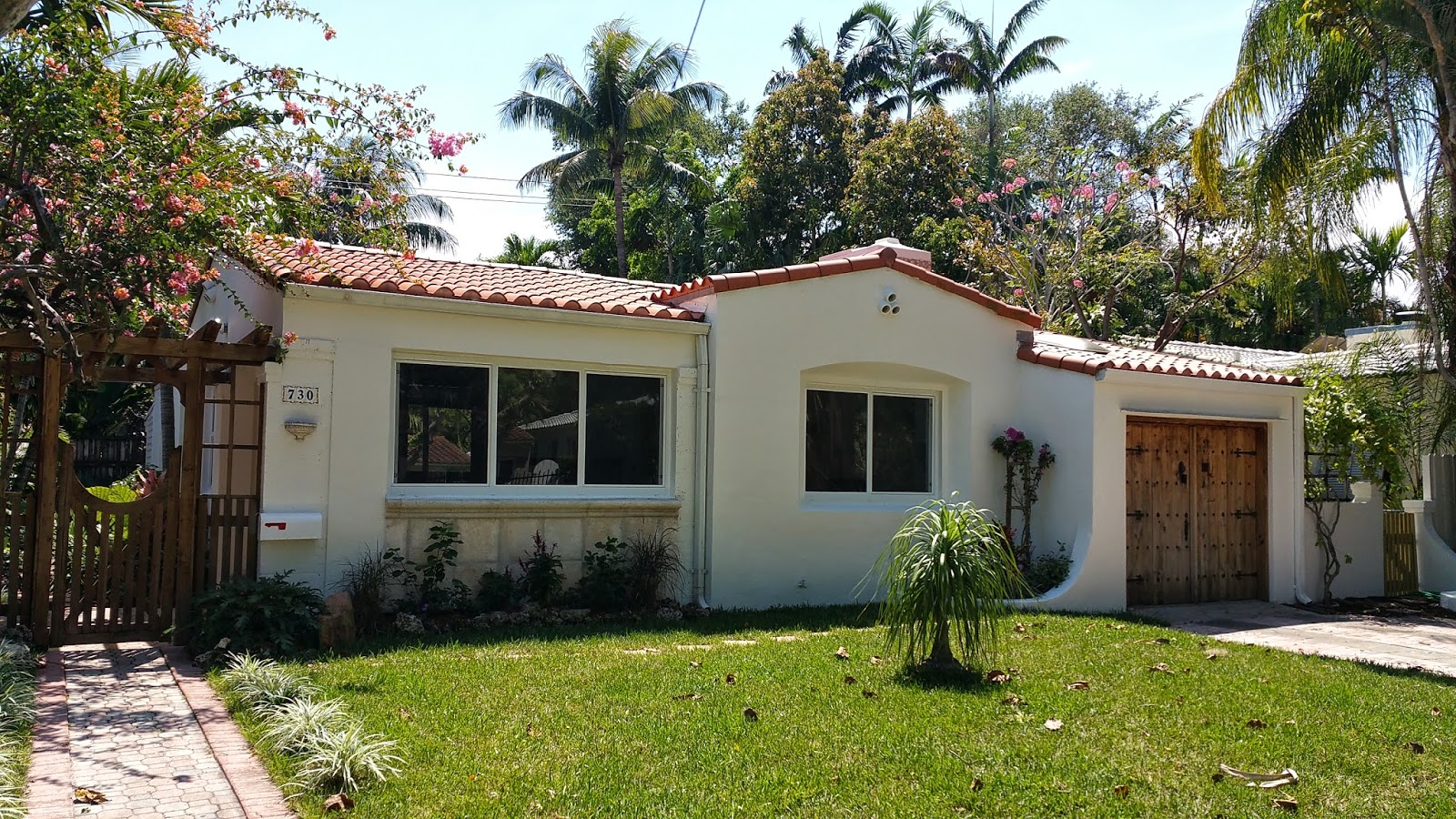
Just Listed in Popular Shore Crest!

730 NE 81st Street
Miami, FL 33138

MLS ID: F1335479
http://southfloridamls.com/DotNet/Pub/EmailView.aspx?r=648395135&s=FLL&t=FLL
1,813sq ft of Living Area
6,240 sq ft Lot
Asking $529,000

Amazing Renovation & Peaceful Private Botanical Hideaway! Enjoy the charm and mystique of this 1934 Spanish-style home with all the modern conveniences you desire. 3/2, living room with fireplace, plus huge Florida room with beam ceilings overlooking your lush gardens through triple sliding doors. Beautifully refinished original oak floors, new cabinetry, marble counters & lighting throughout, stainless appliances, & frameless shower doors. Plus new impact windows, interior & sliding doors, paver driveway.

See the full MLS Listing Here:

Client Detail View (More Info, Smaller Photos)

http://southfloridamls.com/DotNet/Pub/EmailView.aspx?r=1161138502&s=FLL&t=FLL

Map View (Less Info, Larger Photos, and Map)

http://southfloridamls.com/DotNet/Pub/EmailView.aspx?r=648395135&s=FLL&t=FLL

Call Branon for More Information at 786-417-4910

South Florida sees third-highest annual home price growth in nation


A strong economy and an influx of new residents meant higher home prices in South Florida over the past year.

The resale value of single-family homes in Miami-Dade, Broward and Palm Beach counties grew 9.2 percent in February over the same month in 2014. Only Denver (10 percent) and San Francisco (9.8 percent) saw bigger annual gains.

Nationwide, home prices grew 4.2 percent over the year.

Those numbers come from a closely watched market barometer, the S&P/Case-Shiller Home Price Indices, which measure home prices around the country and are released on a two-month lag. But rising home values can pose a problem if wages don’t keep up.

“In order for people to move into a second home, we need first-time home buyers to come into the market,” said Bill Banfield, a vice president at the mortgage lender Quicken Loans. “If the jobs being created for younger people don’t have sufficient wages, you’re going to end up with buyers priced out of the market and reluctant to purchase a home.”

As in recent reports, South Florida’s monthly price gains remain slightly less rampant after warp-speed increases post-recession. Analysts say the slow and steady growth is a sign of a healthy market, not a cause for concern.

Between January and February, home values in the Tri-County area grew at a seasonally adjusted rate of 1.1 percent. That was solidly in the middle of the pack compared with the 20 major metropolitan areas measured by the report. San Francisco (3.3 percent), Denver (2.2 percent), Los Angeles (1.6 percent) and Minneapolis (1.6 percent) led the way in terms of monthly growth.

One factor dragging on Miami’s growth: a stubbornly high rate of “distressed” sales, which include foreclosures and short sales. Short sales occur when the seller owes more on a home mortgage than the house is worth. Both usually sell at steep discounts to traditional home sales.

“Investors and others looking to take advantage of bargains were driving up home values in Miami and South Florida,” said Kwame Donaldson, an economist at Moody’s Analytics. “Now that those bargains are growing more rare, we’re seeing less price appreciation. This is a return to a normal market.”

Read more here: http://www.miamiherald.com/news/business/article19800501.html#emlnl=5-Minute_Herald#storylink=cpy

Miami-Dade County led the nation in distressed sales in February, according to a recent report from the property analytics firm CoreLogic, with more than 24 percent of local home sales in February considered distressed. That’s way down from 2009, when one in two Miami-Dade home sales were distressed sales, but the dial has scarcely moved since last year.

Florida’s housing market was hit harder than most other states during the financial crisis, and its court system has struggled to keep up with the pace of foreclosures. Distressed sales accounted for 22 percent of the state’s total home sales in February.

Foreclosures and short sales made up 13.5 percent of home sales nationwide. “The judicial wheels have stalled in Florida,” Donaldson said.

Information from The Associated Press was used in this report.

Read more here: http://www.miamiherald.com/news/business/article19800501.html#emlnl=5-Minute_Herald#storylink=cpy

Read more here: http://www.miamiherald.com/news/business/article19800501.html#emlnl=5-Minute_Herald#storylink=cpy

Home values across the nation

Prices for single-family homes in Miami rose 9.2 percent in February 2015 over February 2014 — the third-fastest rate of growth in the nation.
CityRankIncrease from Feb. 2014
Denver110 percent
San Francisco29.8 percent
Miami39.2 percent
Dallas48.6 percent
Seattle57.1 percent
Portland67.1 percent
Tampa76.9 percent
Los Angeles85.8 percent
Las Vegas95.8 percent
Atlanta105.6 percent
National
4.2 percent
SOURCE: S&P/Case-Shiller Home Price Indices

Read more here: http://www.miamiherald.com/news/business/article19800501.html#emlnl=5-Minute_Herald#storylink=cpy

Home values across the nation

Prices for single-family homes in Miami rose 9.2 percent in February 2015 over February 2014 — the third-fastest rate of growth in the nation.
CityRankIncrease from Feb. 2014
Denver110 percent
San Francisco29.8 percent
Miami39.2 percent
Dallas48.6 percent
Seattle57.1 percent
Portland67.1 percent
Tampa76.9 percent
Los Angeles85.8 percent
Las Vegas95.8 percent
Atlanta105.6 percent
National
4.2 percent
SOURCE: S&P/Case-Shiller Home Price Indices

Read more here: http://www.miamiherald.com/news/business/article19800501.html#emlnl=5-Minute_Herald#storylink=cpy

Article Courtesy of The Miami Herald and Author Nicholas Nehamas
Original Article: http://www.miamiherald.com/news/business/article19800501.html#emlnl=5-Minute_Herald

Thursday, June 30, 2011

No EHLP Foreclosure Prevention Help for Floridians


In danger of foreclosure? You have until July 22 to apply for the federal government's Emergency Homeowners' Loan Program.
By Emily Glazer, WSJ
[Unfortunately, Florida is not included in the participating states, but Puerto Rico is included. Interesting!
EHLP will be available in the following states: Alaska, Arkansas, Colorado, Hawaii, Iowa, Kansas, Louisiana, Maine, Massachusetts, Minnesota, Missouri, Montana, Nebraska, New Hampshire, New Mexico, New York, North Dakota, Oklahoma, South Dakota, Texas, Utah, Vermont, Virginia, Washington, West Virginia, Wisconsin, and Wyoming. EHLP is also offered in Puerto Rico. ]

Eligible homeowners can qualify for an interest-free loan to pay a portion of their monthly mortgage for up to two years, or up to $50,000, whichever comes first. The money also can be used to pay missed mortgage payments and past-due charges including principal, interest, taxes, insurance and attorney's fees.
Requirements include household income no greater than $75,000 or 120% of the area median income. Homeowners also must be at least three months delinquent on mortgage payments and have received notification of their lender/servicer's intention to foreclose.
Loans will be given out to as many as 30,000 borrowers, with an average loan amount of about $35,000, according to the Department of Housing and Urban Development.
The program is available in 27 states, including Massachusetts, New York and Texas. In most states, you must apply through a participating credit-counseling agency, such as CredAbility or Money Management International. Connecticut, Delaware, Idaho, Maryland and Pennsylvania operate and administer the program directly.
Go to http://FindEHLP.org or call 855-346-3345 for more information.
Written by Emily Glazer, Wall Street Journal
http://online.wsj.com/article/SB10001424052702304569504576408220945889118.html?link=SM_spn_re_res
  

Wednesday, June 29, 2011

2 Major Banks Offer Cash Incentives to Homeowners to Short Sell

‘Secret’ short sale reward in Florida?

FORT LAUDERDALE, Fla. – June 29, 2011 – Two lending giants are reportedly offering homeowners who are behind on their mortgage a cash reward to agree to a short sale in Florida.

JPMorgan Chase & Co. and Wells Fargo & Co. aren’t releasing many details about the short-sale incentives, but defaulting homeowners in Florida have confirmed that they’ve received anywhere from $10,000 to $20,000 from the banks in order to agree to a short sale.

To help homeowners avoid foreclosure, banks have offered a “cash for keys” program, offering money in exchange for surrendering the home, but banks offering incentives for a short sale would be new, industry insiders say. Usually the perception is that banks agree to do a short-sale transaction as almost a favor for homeowners, experts note.

The banks won’t say why only some homeowners are being chosen to receive the cash incentives, nor its criteria for choosing who gets the reward, only saying it’s determined by “individual circumstances,” according to the Florida Sun-Sentinel.

The short-sale incentives are a way for the two banks to write off the bad loans as soon as possible and avoid the lengthy process of foreclosure, experts say.

Wells Fargo says it offers the cash incentives to homeowners in Florida and other states "where the foreclosure process is lengthening," spokesman Tom Goyda told the Florida Sun-Sentinel.

In the first three months of 2011, the average foreclosure in Florida took 619 days, according to RealtyTrac Inc.

Source: “Chase Borrowers Getting Cash to Complete Short Sales,” South Florida Sun-Sentinel (June 27, 2011)

© Copyright 2011 INFORMATION, INC. Bethesda, MD http://www.floridarealtors.org/NewsAndEvents/article.cfm?p=1&id=261702
   

Tuesday, May 3, 2011

Fort Myers High-Rise Finally Draws Crowd

By THE ASSOCIATED PRESS 
Published: April 29, 2011

FORT MYERS — For two years, Victor Vangelakos was the only resident of a 32-story riverfront tower in Fort Myers.
Now, he has dozens of new neighbors at the Oasis, thanks to new ownership and a new push to sell homes at the high-rise condominium development.

Vangelakos has been out of town, but says he can't wait to see the neighbors. Meanwhile, the Weehawken, N.J., firefighter and the developer remain locked in a bitter legal dispute.

"I'm coming there at the end of the month for just two days" on the way back to New Jersey from Miami, where he's giving a deposition in the lawsuit, Vangelakos said.

"I have yet to see it. I'm looking forward when I get down there to asking all the neighbors how things are going," he said.
The sales push, started with an auction Nov. 20, by new owner Oasis Associates LLC of 40 units to get sales going. Those units were sold at absolute auction, meaning the high bid took the unit with no minimum price by the seller.

Five months later, units have been selling steadily, said Wendy Payton-Enriquez, spokeswoman for The Related Group, which is still managing the project and handling sales.

According to Lee County Clerk of Court records, 12 units at Oasis have been sold in the past two months. The price varied from $155,000 for a one-bedroom condo on the 15th floor to $284,000 for three bedrooms on the 23rd floor.

In Tower 1, where Vangelakos lives, 82 of 200 units are sold or under contract. With a bulk sale of 224 units in Tower 2 in February, that means "the project's about 70 percent sold," Payton-Enriquez said.

The riverfront condominiums are selling briskly, Payton-Enriquez said - and most buyers are paying cash.

It has been a turbulent year for Oasis.

Bank of America, which financed the two towers' construction, filed for foreclosure a year ago on its $154 million loan to Oasis' developer, Miami-based Related. Four months later, the bank assigned the mortgage to a company with connections to Related.
Most of the buyers are using the condos as second homes, although a few are living there full time, Payton-Enriquez said.
Jeff and Carol Turcotte bought a three-bedroom unit on the 14th floor for $165,000 at the auction and now split their time between there and Bristol, N.H., Jeff Turcotte said.

"I think we ended up doing pretty well," he said. "We originally looked at Oasis when this was pre-construction. We liked the plans but thought the price was too high. We ended up buying a villa home at Moody River Estates" in North Fort Myers.
Also, Turcotte said, they moved because of the spectacular views and the project's location.

"We liked the way it was close to downtown Fort Myers," he said. "We like the restaurants, we like the proximity to the city."
Fort Myers Mayor Randy Henderson said he's glad to hear that, and that he's working to make the downtown even more of a magnet for the riverfront towers. They sprung up after the city hired Miami-based architect Andres Duany to draw up a plan to reinvigorate that part of the city.

Sales at the towers fell sharply, however, after the housing market imploded starting in early 2006. Units at Oasis, for example, now go for less than half their pre-construction prices.

"I'm a little guarded," Henderson said. "I don't want to get too optimistic, because things are going to taper off" after this winter's tourist season ends.

But he said all the signs are encouraging. City officials are in discussions to get a Columbia Restaurant downtown - the Tampa landmark dates back a century and has an enthusiastic following in Florida.

Fort Myers-based commercial real estate broker Steve Luta said he sees a general improvement in downtown real estate. "Things are selling," Luta said.

Payton-Enriquez said a lot of the buyers are Midwesterners, although Oasis is also getting interest from the West Coast and some European countries - notably Germany, Austria and Switzerland.

The buyers tend to like the contemporary design of the building and also the assurance that the auction brought to pricing, she said.
"The effect was to jump start the sales process, which was the goal."

With so many cash buyers, Payton-Enriquez said, Oasis' stability is more assured. "There's no foreclosures or short sales in there," she said.

Meanwhile, Vangelakos wants the company to return his deposit and let him out of his purchase of the unit he bought in December 2008. All the other buyers either accepted a swap for a Tower 2 unit or simply walked away from their deposits.

He and his family have vacationed at the condo, where they're usually the only people in the building.

Vangelakos attended the auction but hasn't been in town since then. He said he's certain he'll like the place more than in the years when he was the only resident and Related provided minimal upkeep.

He may not know his new neighbors yet, but they know him because of media coverage, Vangelakos said with a chuckle. "At the auction, they all knew me," he said.

Originally Published: http://www2.tbo.com/business/breaking-news/2011/apr/29/fort-myers-high-rise-finally-draws-crowd-ar-203784
    

Saturday, November 6, 2010

How to Assess the Real Cost of a Fixer-Upper House


When you buy a fixer-upper house, you can save a ton of money, or get yourself in a financial fix.

Trying to decide whether to buy a fixer-upper house? Follow these seven steps, and you’ll know how much you can afford, how much to offer, and whether a fixer-upper house is right for you.


1. Decide what you can do yourself

TV remodeling shows make home improvement work look like a snap. In the real world, attempting a difficult remodeling job that you don’t know how to do will take longer than you think and can lead to less-than-professional results that won’t increase the value of your fixer-upper house. 

  • Do you really have the skills to do it? Some tasks, like stripping wallpaper and painting, are relatively easy. Others, like electrical work, can be dangerous when done by amateurs.

  • Do you really have the time and desire to do it? Can you take time off work to renovate your fixer-upper house? If not, will you be stressed out by living in a work zone for months while you complete projects on the weekends?


2. Price the cost of repairs and remodeling before you make an offer

  • Get your contractor into the house to do a walk-through, so he can give you a written cost estimate on the tasks he’s going to do.

  • If you’re doing the work yourself, price the supplies.

  • Either way, tack on 10% to 20% to cover unforeseen problems that often arise with a fixer-upper house.


3. Check permit costs

  • Ask local officials if the work you’re going to do requires a permit and how much that permit costs. Doing work without a permit may save money, but it’ll cause problems when you resell your home.

  • Decide if you want to get the permits yourself or have the contractor arrange for them. Getting permits can be time-consuming and frustrating. Inspectors may force you to do additional work, or change the way you want to do a project, before they give you the permit.

  • Factor the time and aggravation of permits into your plans.


4. Doublecheck pricing on structural work

If your fixer-upper home needs major structural work, hire a structural engineer for $500 to $700 to inspect the home before you put in an offer so you can be confident you’ve uncovered and conservatively budgeted for the full extent of the problems.

Get written estimates for repairs before you commit to buying a home with structural issues.

Don’t purchase a home that needs major structural work unless:
  • You’re getting it at a steep discount
  • You’re sure you’ve uncovered the extent of the problem
  • You know the problem can be fixed
  • You have a binding written estimate for the repairs


5. Check the cost of financing

Be sure you have enough money for a downpayment, closing costs, and repairs without draining your savings.

If you’re planning to fund the repairs with a home equity or home improvement loan:

  • Get yourself pre-approved for both loans before you make an offer.

  • Make the deal contingent on getting both the purchase money loan and the renovation money loan, so you’re not forced to close the sale when you have no loan to fix the house.

  • Consider the Federal Housing Administration’s Section 203(k) program, which lets qualified purchasers wrap up to $35,000 into their mortgages to upgrade their home before they move in.


6. Calculate your fair purchase offer

Take the fair market value of the property (what it would be worth if it were in good condition and remodeled to current tastes) and subtract the upgrade and repair costs.

For example: Your target fixer-upper house has a 1960s kitchen, metallic wallpaper, shag carpet, and high levels of radon in the basement.

Your comparison house, in the same subdivision, sold last month for $200,000. That house had a newer kitchen, no wallpaper, was recently recarpeted, and has a radon mitigation system in its basement.

The cost to remodel the kitchen, remove the wallpaper, carpet the house, and put in a radon mitigation system is $40,000. Your bid for the house should be $160,000.

Ask your real estate agent if it’s a good idea to share your cost estimates with the sellers, to prove your offer is fair. 


7. Include inspection contingencies in your offer

Don’t rely on your friends or your contractor to eyeball your fixer-upper house. Hire pros to do common inspections like:
  • Home inspection. This is key in a fixer-upper assessment. The home inspector will uncover hidden issues in need of replacement or repair. You may know you want to replace those 1970s kitchen cabinets, but the home inspector has a meter that will detect the water leak behind them.

  • Radon, mold, lead-based paint
  • Septic and well
  • Pest

Most home inspection contingencies let you go back to the sellers and ask them to do the repairs, or give you cash at closing to pay for the repairs. The seller can also opt to simply back out of the deal, as can you, if the inspection turns up something you don’t want to deal with.

If that happens, this isn’t the right fixer-upper house for you. Go back to the top of this list and start again.